Most commercial roofs don’t fail all at once. A small seam opens up in March, water gets into the insulation by July, and by the time a ceiling tile stains in September, the damage is already expensive. A regular inspection schedule is how property owners catch those problems while they are still minor repairs.
If you manage a building in Broward County, the question isn’t whether to inspect your roof. It’s how often. The answer depends on your roof’s age, its membrane type, how the building is used, and how much weather it has been through. This guide covers a practical baseline, the factors that should push your schedule up or down, and what a professional commercial roof inspection in Broward County should include.
The Short Answer: Twice a Year, Plus After Major Storms
The most common recommendation in the roofing industry is a professional inspection twice a year, usually in spring and fall, plus an extra inspection after any significant weather event.
In South Florida, the timing matters. Hurricane season runs from June 1 to November 30, so a spring inspection lets you fix weak points before the season starts. A fall inspection, once the heaviest storm months have passed, shows what the season did to the roof.
Twice a year is a baseline, not a legal requirement. Some roofs can reasonably go longer between full inspections, and others need more attention. Check your roof warranty and your insurance policy too, since either may spell out inspection or maintenance expectations.
What Changes Your Inspection Frequency
Roof Age
Newer roofs generally need less frequent inspections than older ones, but they shouldn’t go unchecked.
- Roofs in their first few years: Installation defects such as poorly sealed seams, flashing gaps, and loose fasteners tend to show up early. An inspection before the workmanship warranty period ends can be worth it.
- Mid-life roofs: Wear accumulates here, and twice a year keeps small issues from stacking up.
- Aging roofs near the end of their service life: Consider quarterly inspections, or at least added checks after every storm. These roofs have less margin for error, and you need good information to plan a repair-versus-replacement budget.
Membrane Type
Different commercial roofing systems age and fail in different ways.
| Roof type | What inspectors pay close attention to |
| TPO and PVC (single-ply) | Seam integrity, flashing details, punctures, and surface wear |
| Modified bitumen | Seam laps, surface granule loss, blistering, and cracking |
| Built-up roofing (BUR) | Blisters, ridging, exposed felts, and surfacing loss |
| EPDM | Seam and flashing adhesion, shrinkage, and punctures |
| Metal roofing | Fasteners, panel seams, sealants, corrosion, and flashing |
If your building has an older flat or low-slope roof, the membrane’s condition is the main thing to track from year to year. Our guide on modified bitumen roofing for older buildings covers one common system in more detail, and our TPO versus EPDM comparison covers two others.
What happens under and on top of the roof affects how hard it works.
Building Use
- Rooftop equipment: Buildings with HVAC units, exhaust fans, or satellite equipment see more foot traffic. Technicians servicing equipment can puncture membranes, leave debris, or disturb flashing without realizing it.
- Restaurants: Grease from exhaust systems can degrade some roofing materials.
- Warehouses and storage: Water intrusion can damage inventory, so catching leaks early has a direct cost benefit.
- Multi-tenant buildings: More people means more complaints and more liability if a leak damages a tenant’s space. Documented inspections help you respond quickly.
Local Conditions in Broward County
Broward County’s climate is hard on roofs. Intense sun, heavy seasonal rain, humidity, and tropical storms all take a toll, and properties closer to the coast also deal with salt air. Broward also falls within Florida’s High-Velocity Hurricane Zone, which has its own product approval and installation requirements, so work on commercial roofs here should be handled by contractors who know those standards. If you’re unsure what applies to your project, confirm with your local building department.
Flat and low-slope roofs are especially common on commercial buildings in the area, and their drainage is a recurring weak point. We cover this in more depth in our articles on flat roof drain clogs and why flat roofs fail faster near the coast.
When to Inspect Outside Your Regular Schedule
Don’t wait for the next scheduled visit if any of these happen:
- After a named storm, tropical storm, or severe thunderstorm with strong winds or heavy rain
- After a roof leak or ceiling stain, even if it dries out
- Before buying or selling a commercial property
- Before renewing or applying for property insurance, when an insurer or agent asks for roof documentation
- After rooftop work by HVAC, solar, or telecom contractors
- When ponding water stays on the roof more than a day or two after rain
What a Professional Commercial Roof Inspection Should Include
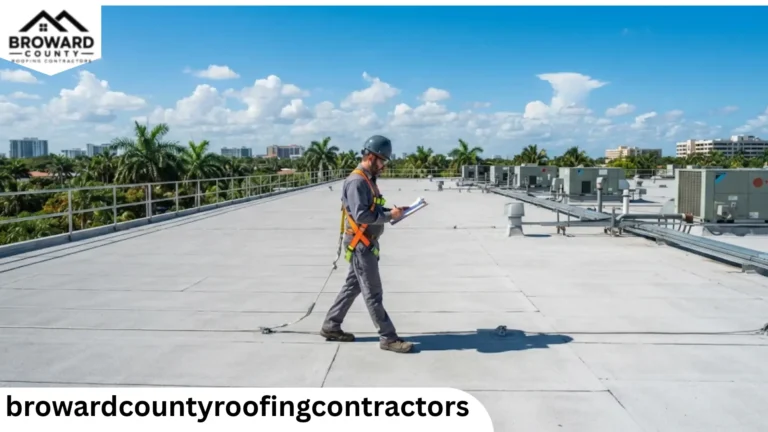
A walk-around with a quick photo isn’t an inspection. A thorough one usually covers:
- Membrane surface: Cracks, blisters, punctures, splits, and weathering
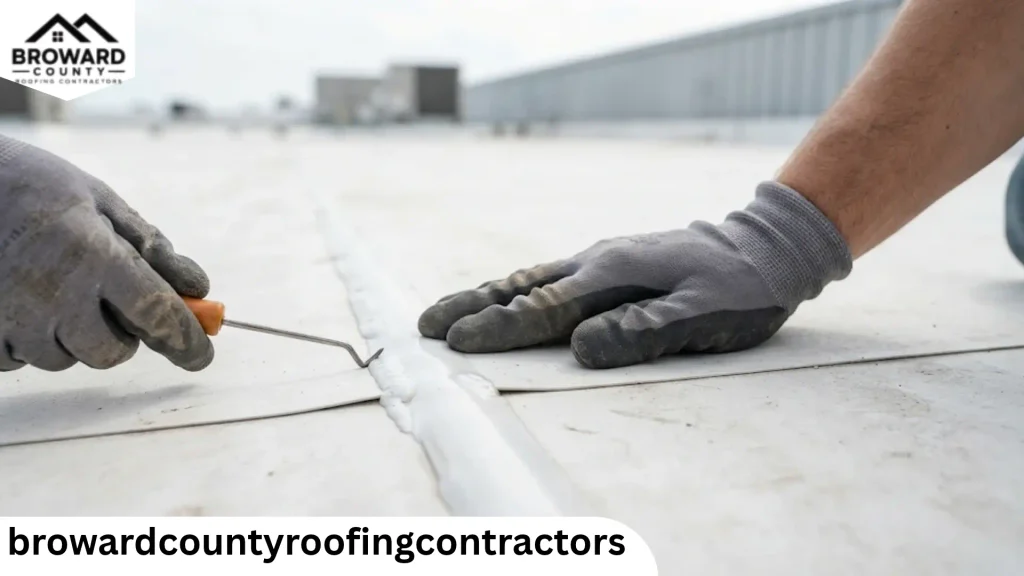
- Seams and laps: Separation, lifting, or failed adhesives and welds
- Flashing and penetrations: Around vents, pipes, curbs, parapet walls, and equipment
- Drainage: Drains, scuppers, gutters, and downspouts, plus any evidence of ponding
- Roof edges and parapets: Coping, edge metal, and fastening
- Rooftop equipment: Condition of curbs, supports, and surrounding membrane
- Interior signs: Stains, mold, or damp insulation, when accessible
- Documentation: Dated photos, written findings, and prioritized recommendations
The documentation is what makes the inspection useful over time. Reports from year to year let you compare conditions, track how fast problems are developing, and make budget decisions with real information.
How Inspections Connect to Insurance
Inspection records can support conversations with your insurance agent or carrier. They show a history of maintenance and document your roof’s condition at a given time. They can also help if you need to demonstrate that damage came from a specific event and not from long-term neglect.
Insurance requirements vary by carrier and policy, and an inspection report doesn’t guarantee any coverage outcome. Ask your agent which roof documentation they may ask for. Depending on your building, that could include a general inspection report, a roof certification letter, or a wind mitigation report. We explain each in our guides on roof certification letters, wind mitigation inspections, and the Florida 4-point inspection.
A Simple Annual Plan for Property Managers
- Spring (before June): Full professional inspection. Clear drains, repair flagged items, and confirm everything is in order before hurricane season.
- After any major storm: Visual check, followed by a professional inspection if you see or suspect damage.
- Fall (after November): Second professional inspection to assess storm-season impact and plan repairs.
- Ongoing: Keep every report, photo, and repair invoice in one file for each building.
- Between inspections: Have your maintenance staff look for debris and standing water and report anything unusual. They should not walk the roof unless trained and equipped to do so safely.
Regular upkeep between inspections matters too. A structured commercial roof maintenance program can catch small items, like debris buildup or loose flashing, that don’t need a full inspection. Our breakdown of how often commercial flat roofs need professional servicing goes deeper on that side.
Scheduling a Commercial Roof Inspection in Broward County
If you don’t have an inspection schedule in place, or you aren’t sure when your roof was last evaluated, start with a baseline inspection. It shows what condition the roof is in now and helps you set a realistic frequency going forward.
To schedule an inspection for your commercial property, call us at (754) 203-8806.
FAQs
How often should a commercial roof be inspected?
Most roofing professionals recommend at least two inspections per year, in spring and fall, plus after major storms. Older roofs or those with known problems may need more frequent checks.
How much does a commercial roof inspection cost in Broward County?
Pricing depends on roof size, accessibility, roof type, and how detailed a report you need. Ask for a written quote that spells out what the inspection covers and what documentation you’ll receive.
Do I need a roof inspection before buying a commercial building?
It’s strongly advisable. A pre-purchase inspection shows the roof’s condition and likely remaining service life, which can affect your offer and your repair budget.
Will a roof inspection help with my commercial insurance?
It can support your records and your conversations with your insurer, but it doesn’t guarantee coverage or lower premiums. Ask your agent what documentation they want.
Should I inspect the roof after a hurricane or tropical storm?
Yes. Even if you don’t see obvious damage, wind-driven rain and debris can compromise seams, flashing, and drainage. A post-storm inspection also gives you dated documentation if you file a claim.
Can my maintenance staff inspect the roof instead?
Staff can do basic visual checks for debris and ponding, but they aren’t a substitute for a trained roofer. Professionals can identify subtle membrane and flashing problems, and they work with the safety equipment roof access requires.