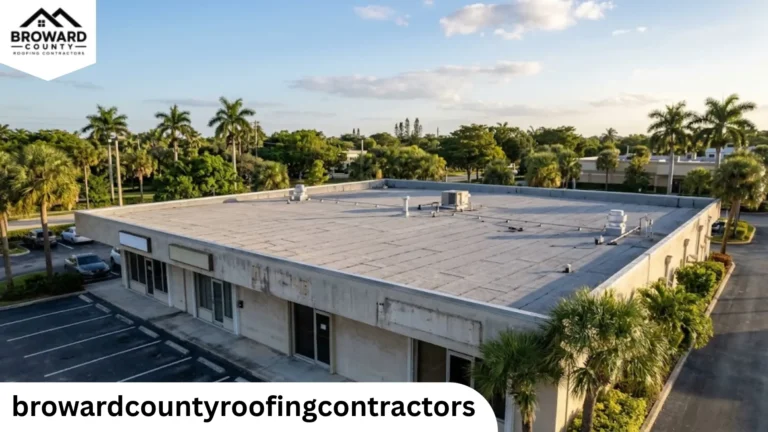
Think about an old building down here. Maybe it’s a corner shop from the sixties, maybe a duplex with a flat roof that’s been patched more times than anyone can count. The walls lean a little. The roof sags near the back. Vents and pipes poke up wherever somebody once needed them.
Now try putting a new roof on it. Some materials fight you the whole way. Others just go along with it. Modified bitumen roofing is one of the go-along ones, and that’s why we bring it up so much with owners of older properties.
At Broward County Roofing Contractors, old flat roofs are part of our week. Let’s discuss what mod bit means, how it helps with tired roofs, where mod bit is not recommended, and what questions one needs to ask a roofer.
Mod Bit in Plain
Take asphalt, the black gooey stuff in road patches. Mix in rubber or plastic so it doesn’t turn hard and snap. Press it into rolls with a tough fabric in the middle. Done. That’s modified bitumen.
Roofers just say mod bit. It goes on in layers, with sheets overlapping like a deck of cards, and the top sheet is covered in tiny stones. Those stones shade the black stuff from the sun.
Two types are out there. One has rubber in it and stays bendy. One has plastic and takes heat well. Both do the job. Which one we pick depends on the roof.
Why Old Buildings Get Along With It
Historic buildings are moody. They expand on warm days and compress on wet days, and a rigid roof is unable to accommodate the movement. Mod Bit is elastic, therefore accommodating the changes.
It also comes in layers, which is how you get a thick roof without a heavy one. Old beams don’t love extra weight. Tile is a brute on a weak frame. Mod bit isn’t.
Odd shapes? No problem. We’ve never met an old roof with square corners. Sheets get cut and fitted around short walls, jogs and the usual forest of pipes.
And when a patch of it gets hurt, we fix that patch. We don’t have to redo the entire roof.
The Weight Thing
Here’s something owners rarely think about until it bites. Roofs weigh a lot. Some old frames can’t hold a heavy one without being strengthened first, and strengthening costs real money.
A lighter roof can save you that. It’s a big reason we reach for mod bit on older flat roofs. We still check the deck and the framing before we start, always. If the wood’s soft, it comes out and gets replaced. No exceptions.
How It Goes On
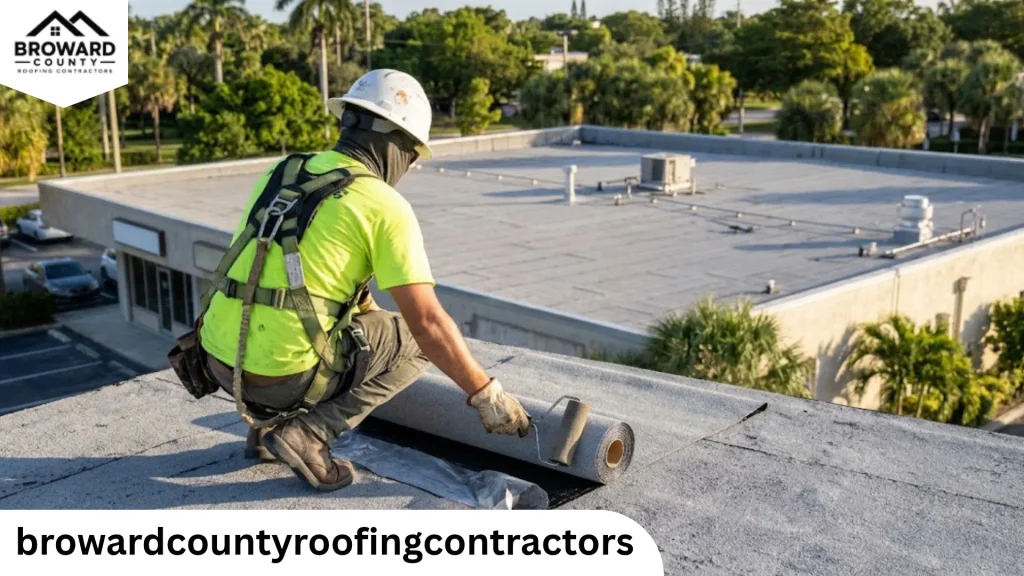
There are four main ways to install it. Peel-and-stick sheets, which need no flame. Sheets glued down with adhesive. Sheets set in hot asphalt. And torch-down, where a flame heats the sheet so it bonds.
With older buildings, we’re picky. Open flame near old, dry wood makes us nervous, and it should make you nervous too. Old structures have little gaps and hidden spaces where heat can sneak in and smolder. So on older properties, we often go with peel-and-stick or glued sheets. It’s about safety, nothing fancier.
Homework Before the First Sheet
On an old building, what you see from the street is maybe half the story.
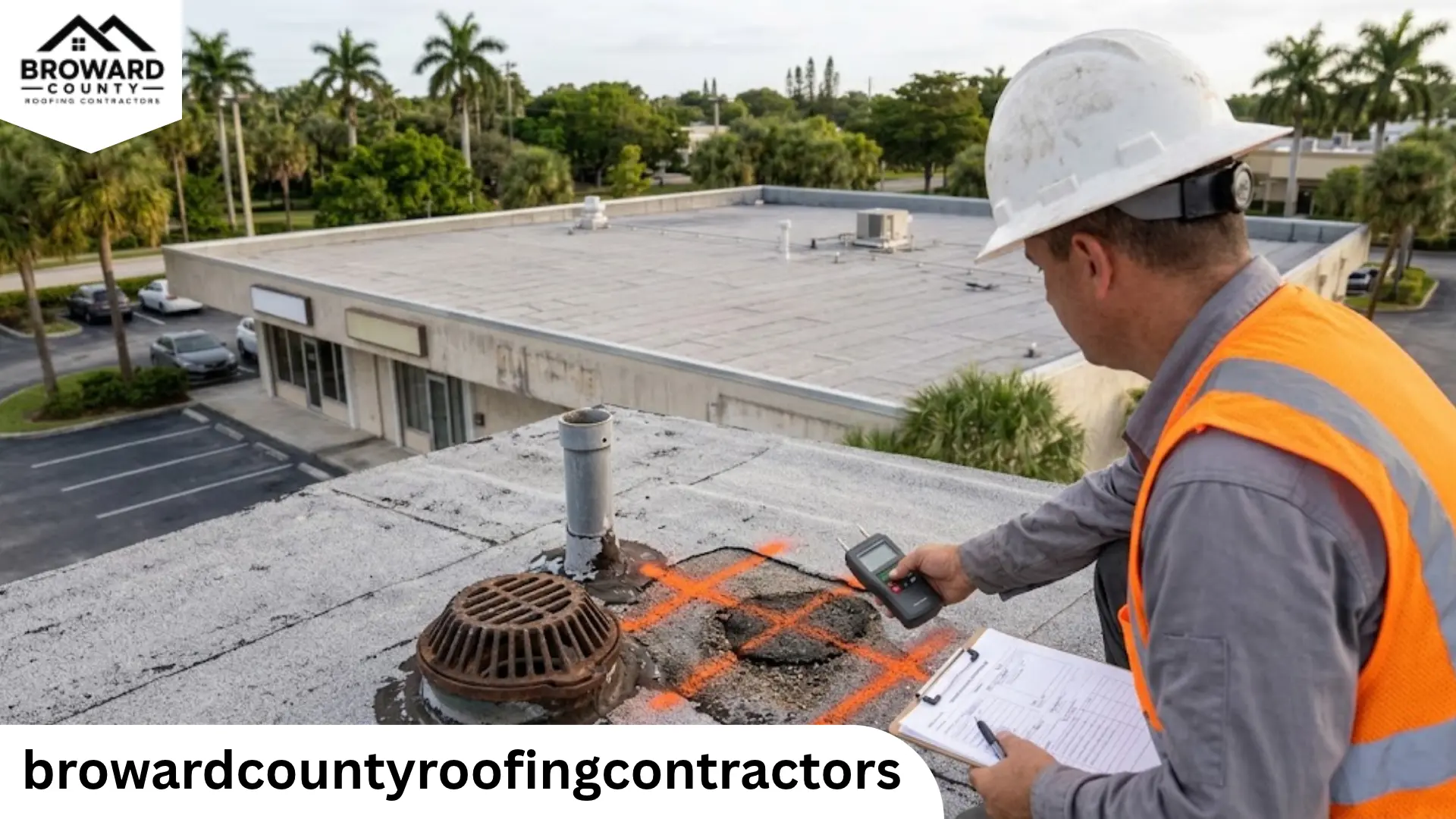
We check the deck for spongy spots. We look at drains, since the old ones are often too small or half full of gunk. We check flashing at walls and pipes. We find out what’s already up there, too.
Really old roofs can hide materials that need special handling. If a building’s old enough, a test before tear-off might make sense. We’ll tell you straight if we think so.
None of this is exciting. All of it matters. Skip it, and you’re guessing, and guessing on a roof gets pricey.
Mod Bit Next to the Rest
Here’s a rough side-by-side. Every roof has its own story, so treat this as a starting point.
| Roof Option | Weight on an Old Frame | Ease of Repair | Fit for Older Buildings |
| Modified bitumen | Light to moderate | Easy to patch | Works well in most cases |
| Single-ply (TPO or similar) | Very light | Fairly easy | Good, but seams need care |
| Built-up (tar and gravel) | Heavy | Moderate | Proven, but heavy and messy |
| Tile | Heavy | Harder | Often too much for an old frame |
Nobody wins every row. Mod bit sits in the middle on cost and weight and does well on repairs. That mix is what keeps it in the conversation.
What Does It Cost?
It would be impossible for us to provide you with a number without first inspecting the roof. The cost would vary greatly based on the size, condition, access and layers. In general terms, however, the mod bit is cheaper than metal or tile roofing, and is comparable to other types of flat roofs.
The savings come in the long run. It’s much better to have a roof that can be repaired and coated rather than completely replaced.
One heads-up. If the deck is in bad shape, the price goes up whichever system you choose. That’s why we say get the inspection first, then compare quotes.
How Many Years?
Let’s be honest. Makers often say twenty years or more. In our heat, count on less.
Around here, a rough range is 12 to 20 years. A multi-layer roof with good drainage and regular care lands near the top. A thin roof with standing water and zero upkeep lands near the bottom.
Metal outlasts it, no question. But for plenty of older buildings, mod bit hits the sweet spot between cost, weight and ease of repair.
Sun, Storms and Salt
Our sun is brutal. The roof surface in July turns into a very hot one, and then a sudden shower in the evening hits it. The materials don’t like this fluctuation.
Stones and color may help. The roof surface which is lighter reflects heat and thus slows down the aging process. Some homeowners apply a reflecting coat in order to revitalize their roofs.
Wind and salt matter too. We lock down the edges, since that’s where wind goes first, and pick metal edging and flashing that can handle coastal air.
The Whole Process, Start to Finish
Here’s how it usually goes.
We start with a walk-through and a moisture scan, to see what’s wet and what’s dry. Next, the permit. When work begins, the old roofing either comes off or stays, depending on how it looks and what the rules allow. Bad wood gets replaced. The base layer goes down, then the top sheet, and every seam gets overlapped and sealed.
Then flashing, edge metal and a check of the drains. A final inspection closes it out. Figure a week or two for most older buildings. A surprise downpour can eat a day or two.
What About a Coating?
A good reflective coating can freshen up an aging mod bit roof. It cools things down and can add a few years. But it only works on a roof that’s still solid and dry underneath.
It won’t stop the roof from leaking or make wet insulation dry. We do inspections before we coat because it just covers up the issues for a couple of months.
Fix or Replace?
Homeowners of older buildings often face this dilemma. If your roof is still in good condition except for the leaks, repairs and a new coating will give you several more years. If your insulation is wet, or seams are splitting in multiple places, then replacing the roof makes sense.
We’d rather say that after a proper look than sell you a roof you don’t need.
The Downsides
Fair is fair, so here’s the other side.
- It won’t last as long as metal
- Seams take real care, and bad seams are the main reason it fails
- Standing water is rough on it, so drains have to work
- Torch jobs need extra care on older buildings
- Heavy foot traffic can scuff the top
None of those ends the conversation. Most come down to a careful install and a bit of upkeep.
Easy Upkeep
The mod bit doesn’t ask for much. Clear the drains before storm season and after any big blow. Check seams and edges once a year. Keep tree limbs off. If the top looks worn, ask about a coating.
Take a few photos at each check. If an insurer ever wonders how well the roof was kept, you’ll have an answer.
Age And Insurance
Roof age is a big deal to many Florida insurers, and older buildings get squeezed the most. Some companies want proof that an aging roof is in good shape before they renew. A newer roof can help with coverage and sometimes with price, but every company plays by its own rules.
So call your agent. Ask how they see your building. And hold on to receipts and inspection notes with dated photos.
Permits and Rules
A roof job here can’t legally start without a permit, and the products have to carry approval for our wind zone, with inspections along the way. Older buildings can add wrinkles, like how many layers may stay on the roof. We check what applies before we start.
If anyone says you can skip the permit, don’t believe them. It can come back at sale time or when you file a claim.
Questions Worth Asking a Roofer
Before you sign, ask a few things. How will you check the deck? What method are you using to install it, and why? How many layers? What happens at the edges and around the drains? Can I see photos from jobs on older buildings?
You’ll learn a lot from the answers. A roofer who’s done this plenty will talk easily about seams and drains. One who hasn’t will change the subject to price.
And get it all in writing. Materials, layers, warranty, the works. If it’s not on paper, it’s just a nice chat.
A Word on Color
Quick tangent, because people always ask. Light colors win in Florida. They reflect more sun, so the roof runs cooler, and a cooler roof ages slower. On a building with an old AC system, that can help the electric bill too.
Dark roofs soak up heat and pass it down. If your building is already hot inside, that’s one more strike against dark.
Our Take
If you asked us over coffee, we’d say it plainly. Mod bit isn’t the fanciest roof. It isn’t the longest-lasting either. For an older building with a flat roof, a tight budget and a frame that can’t carry much, though, it’s often the one that fits.
Just don’t buy it blind. A careful install matters more than the brand on the roll. Seams, drains and edges decide how it ages, so pick a roofer who talks about those first.
How We Help
The Broward County Roofing Contractors install, repair, and reapply modified bitumen systems across Broward County. We will inspect your deck, replace your bad wood, replace flashing and edge metal, improve your drainage, and get your permits. If anything else is more suitable for your building, we’ll let you know!
You get photos, a written plan and straight answers. That’s the standard we hold ourselves to.
FAQs
Is modified bitumen the same as torch-down roofing?
Not quite. Torch-down is one way to install it. Mod bits can also be peel-and-stick, glued or hot mopped.
How many layers does it have?
Usually two or more, often a base sheet and a top sheet. More layers can mean more protection.
And what if the roof is slightly sloping?
It might work. Light dips may be leveled using tapered insulation. More serious slopes require repairs to the deck first.
Which color would be the best in Florida sunshine?
Bright or reflective colors will help reduce heat absorption. In the case of an old roof, you might apply reflective coating.
How much maintenance is required?
Little. Drainage systems should be clear, annual inspection and repairs of seams and edges are all that’s required.
Are there any fire hazards related to the installation process?
Only for torch applied installations. For older structures, we usually go with peel and stick and glued sheet membranes to avoid it.
Before You Decide
Are you the owner of an older building with a worn-out flat roof? Take your time. Inspect the deck, explore every installation option and get at least two bids.
Need another opinion? The team from Broward County Roofing Contractors will inspect the roof and honestly tell you if a modified bitumen roofing system will be the right choice for your building.