
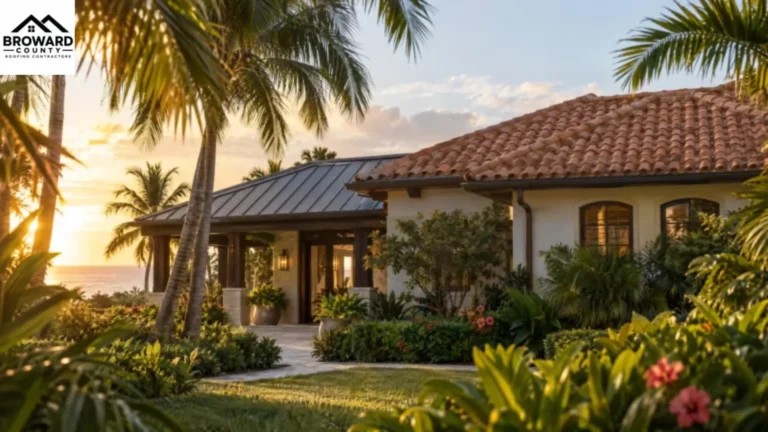
Roofing decisions are different once you actually live in Broward County. Somewhere with mild weather, a homeowner might pick a roof based on looks alone and never think twice. Here, the sun doesn’t let up, the air off the water carries salt everywhere, and storm season isn’t a maybe, it’s a yearly guarantee.
Two materials keep coming up when people call Broward County Roofing Contractors: metal roofing and barrel tile. Neither one is wrong, exactly, but each one wins and loses in different spots once real Florida weather gets involved. Let’s walk through it without the sales pitch.
What A Roof In This Region Has to Endure
Before picking sides between metal and tile, it helps to know what either one is signing up for. A roof in this county isn’t sitting pretty, it’s working overtime against three things at once, every single day.
- Nonstop sun that slowly wears down weaker materials
- Rain and humidity that test every seam and seal
- Hurricane season winds that yank at fasteners and edges
Whatever goes on top of your house has to shrug off all three at the same time. That’s the real exam, not how nice it looks on a calm, sunny Tuesday.
Broward County Roofing Contractors install and repair both materials constantly, so we’ve had a front-row seat watching how each one actually holds up once the novelty wears off and a real Florida summer sets in.
Color Choices And Building Restrictions
Metal shows up in a long list of colors and finishes these days, everything from deep charcoal and bronze down to lighter shades built to bounce back even more sun. Plenty of homeowners now choose metal cut to mimic the shape of barrel tile, landing a similar look with a much lighter roof overall.
Tile keeps things a little more traditional, sticking mostly to warm terracotta, sandy, and reddish tones that give a house that familiar coastal look. If you’re in a community with an HOA watching roof colors closely, it’s smart to check what’s actually approved before you get attached to either option.
Warning Signs
A lot of homeowners put off thinking about their roof until something goes wrong, mostly because the early warning signs aren’t obvious from the driveway. A handful of things are worth keeping an eye on.
- Tiles that keep cracking or slipping even after repairs
- Rust streaks or soft spots showing up on an aging metal roof
- Ceiling stains appearing after a heavy rain
- Cooling costs creeping up with no obvious explanation
Spotting these early usually means a smaller repair bill down the line. Waiting until there’s an actual leak dripping into your living room almost always costs more.
Metal Roofs, Simplified
Metal roofing shows up mostly two ways, long standing seam panels with raised ridges, or metal shingles cut to look like tile or wood shake from a distance. Either way, you’re looking at big interlocking pieces instead of hundreds of individual units.
The thing metal does best is bounce heat right back off the surface instead of soaking it up. That translates into a noticeably cooler attic, which your AC unit will quietly thank you for come July and August.
Barrel Tile, Stripped Down To Basics
Barrel tile is that curved, Spanish-style roofing draped across half the neighborhoods in South Florida. Clay or concrete, usually, and it hands a house that warm, old-world look plenty of Broward homeowners specifically go looking for.
There’s real heft to tile, and that heft is exactly why it plants itself so firmly against wind once it’s on correctly. The flip side is a single piece of flying debris can crack an individual tile, even while the roof underneath stays perfectly sealed.
Surviving An Actual Hurricane
Both hold their own in a storm, assuming the install was done right, but they get there through different tricks. Metal counts on tight fastening and interlocking panels to fight wind uplift. Done correctly, the wind just doesn’t find a gap to grab onto.
Tile counts on weight and whatever is underneath it. Individual tiles might chip or crack from debris, but the underlayment beneath is doing the actual waterproofing job, so a handful of cracked tiles doesn’t necessarily mean water’s getting in yet.
Cooling Your House Down
If summer electric bills make you wince, roofing material genuinely factors in. Metal’s whole reputation is built on reflecting heat instead of soaking it in, which usually means a measurably cooler attic space.
Tile isn’t far off, though. Those curved tiles create tiny air gaps underneath, which acts like a built-in insulation layer between the tile and your roof deck. It won’t reflect quite like metal does, but it still keeps a good chunk of heat from pouring straight through.
The Real Cost Over The Years
The sticker price is only half the story. Tile usually runs more to install, partly the material cost and partly because some older homes need extra structural reinforcement to safely hold the added weight. Metal typically costs less going in and sidesteps the structural question completely, since it’s so much lighter to begin with.
Stretch it out over a couple decades and both materials tend to even out, since either one can genuinely last that long. The real gap usually comes down to what your specific house needs to safely carry one option over the other.
What Upkeep Actually Looks Like
Metal wants the occasional check on fasteners and seams, especially since salty coastal air can speed up corrosion if the wrong coating went on in the first place. A rinse every so often knocks salt residue off the surface before it causes trouble.
Tile needs its own attention too, mostly swapping out individual cracked tiles after storms or heavy foot traffic. Florida humidity invites algae and staining, so some owners have their tile gently cleaned every few years just to keep the color looking right.
How Long You’re Actually Getting
Both outlast something like asphalt shingles by a wide margin. Metal commonly runs several decades with basic upkeep, often outliving whatever mortgage you took out on the house. Tiles can go just as long, sometimes longer, since the tiles themselves rarely fail, it’s the underlayment hiding beneath them that eventually needs a redo.
Can Your House Actually Carry It
This is where the two really split. Tile is heavy, full stop, and a lot of older Broward homes weren’t framed with that kind of weight in mind. Before tile goes anywhere near your roof, it’s worth getting the structure checked.
Metal sidesteps that whole conversation. It’s light enough that most houses handle it without any structural work at all, which makes it an easier call if your home wasn’t originally built to carry something heavy overhead.
Insurance And What Buyers Notice
Both metal and tile can qualify for wind mitigation discounts on your homeowners policy, since insurers generally rate both as solid performers against hurricane-force wind. The actual discount depends on your specific setup and installation, so it’s worth a direct call to your agent.
On resale, tile carries a certain charm plenty of Broward buyers connect with Florida living in general. Metal’s been catching up fast too, particularly with buyers who care more about energy savings and skipping frequent upkeep.
Side By Side, No Fluff
Here’s the short version if you just want the numbers next to each other.
| What Matters | Metal | Barrel Tile |
| How long it lasts | Around 40 to 60 years | 50 years or more |
| Weight on the house | Light | Heavy, sometimes needs extra support |
| Standing up to wind | Strong when seams are tight | Strong, but a stray tile can crack |
| Bouncing back heat | Excellent | Decent, not quite as sharp |
| What you pay going in | Moderate to higher | Higher, especially with structural work |
| Upkeep down the road | Check the fasteners now and then | Swap a cracked tile here and there |
| Holding up to salt air | Good with the right coating | Naturally tough against it |
Picking The One That Really Works
There’s genuinely no universal right answer here. Older home that wasn’t built for extra weight, or you’d rather deal with less upkeep long term? Metal’s usually the simpler road. Love that classic Spanish look and your house can handle the weight? Tile is tough to beat on style and track record.
Think about your timeline too. Settling in for the next twenty or thirty years? Long-term durability probably matters more than the number on the initial quote. Planning to sell in the next few years instead? Curb appeal and what buyers expect in your specific neighborhood might carry more weight in the decision.
The only real way to know for certain is having your actual roof and house structure looked at by somebody who installs both materials regularly, not someone who only sells one option and has a reason to talk you into it.
A Couple Myths Worth Killing
Some misunderstandings keep popping up whenever metal and tile get compared, and clearing them up makes the whole decision easier.
One that won’t die is the idea that metal roofs pull in more lightning strikes. That’s just not true. Metal doesn’t make a house more of a target, and if lightning does strike, a metal roof is actually less likely to catch fire than plenty of other materials.
Another one, tile supposedly needs zero attention ever because the tiles last forever. The tiles might genuinely outlive the house, sure, but the underlayment tucked underneath them still ages on its own clock and eventually needs replacing, even while every single tile on top still looks brand new.
The Process Of Installation
Whichever material ends up on your house, a proper installation follows roughly the same path. Our crew inspects the existing roof and the structure underneath it first, confirms whether reinforcement is needed, then strips the old material down to bare deck.
From there, a new underlayment goes down first since that’s your real waterproof barrier, then the metal panels or tiles go on top. We finish by flashing around chimneys, vents, and roof edges, because that’s usually exactly where leaks start when a job gets rushed.
How We Fit Into This Decision
Broward County Roofing Contractors install both metal roofing and barrel tile, so we’re not steering you toward one just because it’s the only thing we know how to put on a house. Our crew handles full roof inspections, new installations, storm damage repair, and complete roof replacement anywhere in Broward County.
We’ll get up on your roof, check what your house can actually support, and give you a straight answer on which material genuinely fits your situation, your budget, and the look you want, not whatever’s trending this particular season.
FAQs
Does metal or tile hold up better in a hurricane?
Both do fine when installed correctly. Metal leans on tight seams to fight wind, tile leans on sheer weight plus a solid underlayment.
Is a metal roof loud when it’s raining?
Not really, as long as there’s proper insulation and solid decking underneath. It won’t sound noticeably louder than tile.
Will an older house need extra work before getting tile?
Sometimes, yes. Tile carries real weight, so an older home may need a structural check first to confirm it can hold up safely.
Which roof actually keeps the house cooler?
Metal usually reflects more heat overall, though tile’s little air pockets help knock down attic temperatures too.
If a few tiles crack, does that mean I have a leak?
Not automatically. The underlayment handles most of the waterproofing, but cracked tiles should still get swapped out quickly.
Which one costs less to maintain as the years go by?
Metal generally needs less hands-on upkeep, mainly checking fasteners, while tile might need the occasional cracked piece replaced.
Torn between metal roofing and barrel tile for your place? Give Broward County Roofing Contractors a call. We’ll get up there, look at what your home actually needs, and help you land on the material that fits your house and your budget, not just what’s popular right now.

- Why Clogged Drains in Flat Roof Systems Cause Major Damage - October 23, 2026
- Why Flat Roofs Fail Faster Near Broward County’s Coastline - October 21, 2026
- TPO or EPDM for Your Broward Business Roof? Let’s Sort It Out - October 20, 2026