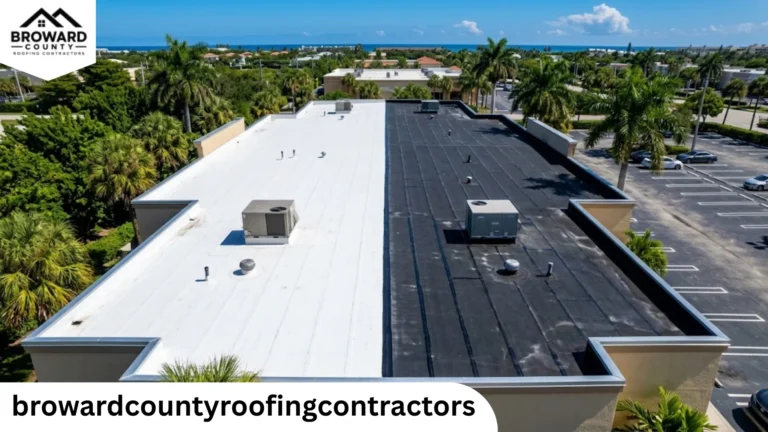
Let me guess how you got here. You’ve got a leak in your flat roof, or your roof is growing old, or a roofing contractor has just given you a quote with three letters that you can’t understand. Then this one’s for you. Most of our customers started in the same spot.
TPO and EPDM are the two flat roof materials business owners ask us about most. Both are good roofs. But they act differently in Broward’s heat, rain, and wind, and picking the wrong one for your building can cost you for years. So let’s talk it through, like two people standing at a counter. No jargon. I’ll tell you what I’d do, and why.
What’s a Roof Membrane?
Quick basics first. A flat roof isn’t really flat. It has a gentle slope so rain runs toward the drains. Over the insulation goes a big waterproof layer, and that layer is the membrane. It’s the part that actually keeps water out of your building.
If you go looking for commercial flat roof membrane options in Broward, you’ll run into TPO, EPDM, PVC, and something called modified bitumen. I’m sticking with TPO and EPDM today, since that’s what most of you are choosing between.
TPO: The White Roof
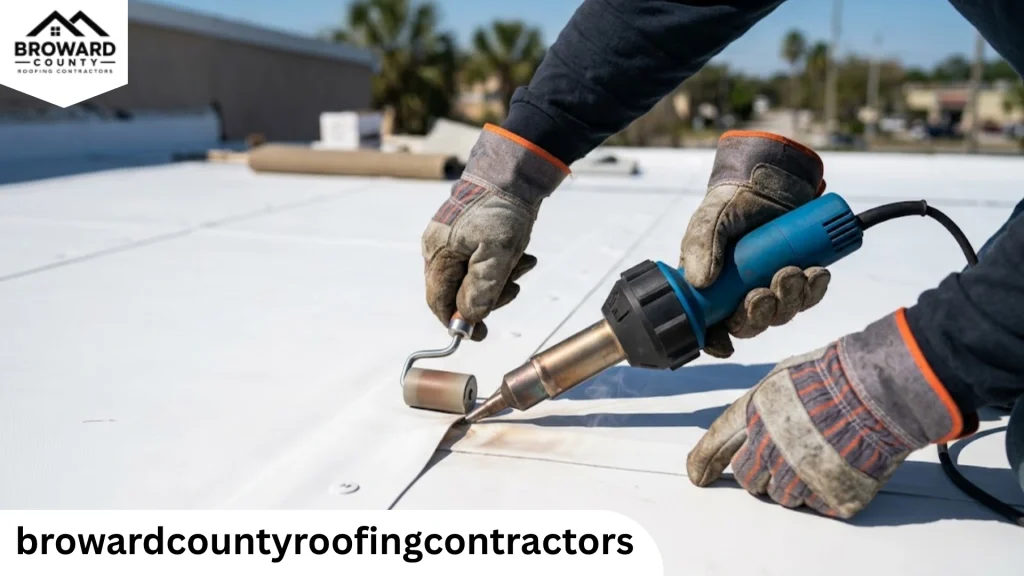
If you’ve ever looked down from a tall building, you’ve probably seen TPO without knowing it. It’s that bright white or light gray roof. It’s a plastic-type sheet. The crew unrolls it, fastens it down, and then joins the edges with a hot-air welder, so the seams fuse together.
The big plus is that white color. It reflects the sun, and in our sun, that matters. It’s a big reason TPO roofing for businesses in Broward County has taken off the way it has.
The catch? It’s the newer of the two, and quality isn’t the same from brand to brand. A thin budget sheet and a thick good one look alike on day one. A couple of years down the line, this doesn’t happen anymore. So if the quote only states “TPO”, request for the manufacturer and the thickness, always.
EPDM – The Rubber Roof
EPDM is a type of rubber roof membrane. With decades of history behind it, people have had enough time to test its longevity. This membrane is durable and flexible and easy to repair. You’ll mostly see it in black, though white is out there too.
I like EPDM for what it is. It’s proven, and it’s often easier on the wallet at the start. My gripe is the sun. Black rubber gets hot, and Broward has a lot of sun. The other soft spot is the seams. They’re usually taped or glued, not welded.
Which One Runs Cooler?
Let’s be real. For most owners, the electric bill is what this comes down to. A white roof throws sunlight back. A black roof keeps it. That heat creeps into your building, and your AC pays the price. So on TPO vs EPDM energy efficiency in Broward, TPO usually wins this round.
How much would you actually save? I can’t say without seeing your building. Insulation, the age of your AC units, the size of the roof, the hours you’re open, they all play a part. If someone gives you a perfect number over the phone, I’d be a little suspicious.
If you love rubber but hate heat, there’s white EPDM. It costs more than the black kind, and it usually doesn’t reflect quite as well as TPO. Still worth asking about.
Seams and Leaks
Here’s something you learn from chasing leaks: the middle of a roof sheet is hardly ever the problem. Leaks start where things join or poke through. Seams. Edges. Drains. Vents. Pipes. AC curbs.
With TPO, the seam is welded, so when it’s done right it’s one solid piece. With EPDM, it’s tape or glue. Good tape on a clean surface works fine. It just leans more on the installer’s hands, and glue gets tired after years of heat.
Fair warning, though. Bad welds leak. Good tape jobs hold. So who does the work matters as much as what goes on the roof. Ask the roofer how they check their seams. If they look at you funny, that tells you something.
Watch for Ponding
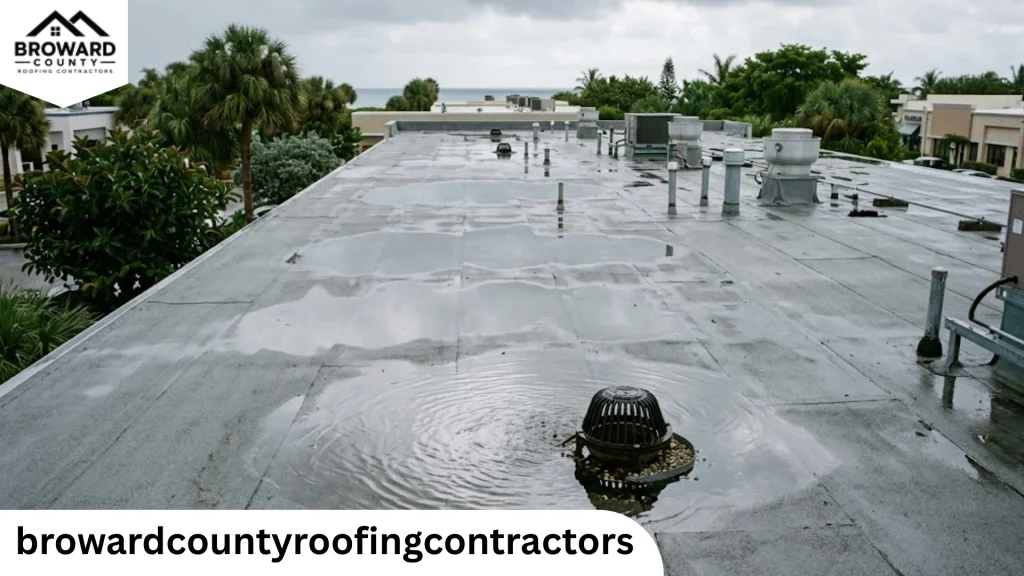
Here’s a free test. Go up, or look out a window, the morning after a big rain. Do you see puddles sitting on the roof?
A little standing water is normal for an hour or two. But if it’s still there a day later, or it’s there every time, your roof isn’t draining right. TPO and EPDM can both handle some water. Not endless water, though. It wears the sheet down faster, and some warranties won’t cover it.
Fix that first. Sometimes it’s as simple as cleaning clogged drains. Sometimes it takes new drains or tapered insulation to add slope. A great membrane on a bad slope is a waste of money.
So What Does It Cost?
People want a number for EPDM roofing costs in Broward County, FL. I get it. But I’m not going to throw out a price per square foot. Those numbers move around, and many online ones come from other states. Every roof is priced on its own.
What I can tell you is this. EPDM usually costs a bit less than TPO on day one. A thicker sheet or a white one can close the gap. Factors that determine the final cost include the size of the roof, the thickness of the sheets used, whether the existing roof is to be removed, the amount of insulation required, number of drains and rooftop units, and type of warranty.
But that does not mean that your job ends after day one. If you choose the cheap solution which will require maintenance, you may actually end up spending more. Be sure to check the quote for all the relevant information concerning the sheet, its thickness, insulation, and guarantee period. If it’s one line with one number, ask for more.
TPO vs EPDM, Side by Side
Here’s the short version in a table.
| TPO | EPDM | |
|---|---|---|
| What it is | Plastic-type sheet | Rubber sheet |
| Common color | White or light gray | Black (white costs more) |
| Seams | Welded with heat | Taped or glued |
| In the sun | Reflects much of it | Black absorbs it |
| Starting price | Usually a little higher | Usually a little lower |
| Age of the product | Newer | Decades of use |
| Works best for | Sunny roofs, high AC bills | Shaded roofs, smaller budgets |
Broward’s Own Rules
Roofing in Broward isn’t like roofing in most places. We’re in a zone with extra-strict wind rules, because of hurricanes. That means your roof has to be a tested setup, where the sheet, the insulation, and the fasteners are approved to work together. You also need a permit and inspections.
So you can’t just grab any membrane and any method. Some products and ways of attaching them aren’t approved here. Your building’s height and roof deck help decide which one fits.
Timing counts too. Hurricane season runs June through November, and we get big afternoon storms even before that. Ask your roofer how they’ll protect the building if the weather turns mid-job.
Any commercial roofing contractor for TPO and EPDM in Broward should be able to tell you which tested system they’re putting on your roof. If all they give you is a brand name, ask again.
Which One Should You Pick?
People ask me all the time about the best flat roof membrane for a South Florida business. For most sunny roofs here, I’d go with TPO. But yours might not be “most.” Here’s how I think about it.
I lean toward TPO when:
- The roof is in full sun most of the day
- Your cooling bill is a big chunk of your costs
- You’d rather have welded seams
- You’re replacing the whole roof
I lean toward EPDM when:
- Shade covers most of the roof
- You already have EPDM that’s in decent shape and just needs repairs
- Money is tight and a warmer roof is okay with you
- You own a few EPDM buildings and want to keep them the same
One more thing. If you run a restaurant and you’ve got grease vents on the roof, say so. Oils can damage some sheets. Ask the maker which one is rated for grease.
What Install Day Looks Like
Flat roof installation for a commercial building in Broward County goes about the same way each time. Here’s how we do it.
- We look first. The deck, insulation, drains, and old sheet all get checked. If we think there’s trapped water, we test for it.
- We talk about options. TPO or EPDM, how thick, how it gets attached, and whether you need tapered insulation.
- You get it in writing. A written estimate comes first. The permit is pulled before anyone starts.
- Old layers come off. Wet or damaged parts go. If the existing roof is dry and sound, then installing a covering on it will work.
- We prepare. Deck repair, installation of new insulation, drainage system and edges.
- The new layer is installed. We seal all the seams and edges, pipes and vents.
- We inspect our work. Seam test, inspection from the inspector, cleanup and warranty documents.
- Whenever possible, we schedule the work around your business hours so that you do not need to shut down the shop for the roof.
How We Can Help
We install and fix both systems, so we’ve got no reason to push one over the other. Here’s what we do on commercial flat roofs:
- Flat roof inspection. We look at what you’ve got and tell you straight whether it’s a repair or a replacement.
- TPO installation. New roofs and replacements, built for Broward’s wind rules.
- EPDM installation. A solid pick for shaded roofs and tighter budgets.
- Flat roof repair. Split seams, worn flashing, clogged drains, and leaks.
- Replacement or recovery. A full tear-off, or a cover-over when the old roof allows it.
- Estimates and permits. Clear numbers up front, and we handle the paperwork.
Pick Your Roofer Carefully
The material is half the job. The crew is the other half. Before you hire anyone, ask to see their license and proof of insurance. Ask if they’ve pulled permits for commercial flat roofs here before. Find out what the maker’s warranty covers, what the contractor’s covers, and get both on paper.
If one quote comes in way under the others, find out why. Thin sheet, no insulation, or no permit can hide behind a low price. And if a roofer says one material is always the answer, I’d be careful. A good one looks at your roof first.
The Short Version
Both TPO and EPDM can do the job. For lots of sunny Broward roofs, TPO has the edge on heat and seams. EPDM is still a viable choice for those working with shaded roofs, a limited budget, and a well-maintained EPDM roof.
Not sure which one you will need? The first step will be to inspect your roof. Our team will provide you with a verbal assessment of your roof and a written estimate. Give Broward County Roofing Contractors a call when you’re ready.
FAQs
Is TPO really better than EPDM in Florida?
For a lot of sunny roofs, yes. The white surface helps with heat, and welded seams are a plus. But EPDM can still be the better pick on a shaded roof or a tight budget. It depends on your building.
How long will my new flat roof last?
Plan on twenty years or more for either one if it’s put on well and looked after. Plugged drains and ignored seams will shorten that faster than the weather will.
Can I just add a new layer over my old roof?
Sometimes. The old roof has to be dry and in good shape, and the code has to allow it. If the insulation underneath is wet, it has to come out. We check before we say yes.
What should a good quote include?
The type of sheet, the brand, the thickness, the insulation, how it’s attached, the permit, and the warranty. If any of these are missing, ask. A one-line quote tells you very little.
How often should someone check my flat roof?
Once a year, and after any big storm. Have the drains cleaned before hurricane season. A quick look can catch a small problem before it turns into a big bill.
Do I need a permit for a new flat roof?
Yes. Roof work in Broward needs a permit and inspections, and your roofer should handle it. If someone says you can skip it, find another roofer.

- Why Clogged Drains in Flat Roof Systems Cause Major Damage - October 23, 2026
- Why Flat Roofs Fail Faster Near Broward County’s Coastline - October 21, 2026
- TPO or EPDM for Your Broward Business Roof? Let’s Sort It Out - October 20, 2026