
Funny thing about commercial roofs. Everybody has a plan for the AC, the alarm system, even the parking lot lights. The roof? Nobody’s name is on it. It just sits up there doing its job, and everyone figures it’ll keep doing it.
Until Monday morning. You walk in, there’s a bucket in the hallway, and a ceiling tile is on the floor.
We work on flat roofs all over Broward, so I’ll give it to you straight. Most commercial flat roofs need professional servicing twice a year, with an extra look after any big storm. That’s the short version. The long version is below, because your building might not fit the short one.
The Two-Visit Rule
Why twice? Because our weather has two moods.
One is the wet season. Storms show up almost daily, and the drains work harder than they ever do. The other is the slow stuff, sun and heat and salty air chewing on the roof month after month.
So you want one visit in spring, before the rain really starts. Fix the small stuff, clear the drains, tighten the edges. Then one in fall, after the worst has passed, to see what the summer did and fix it before the dry months. Miss the spring visit and you’re heading into storm season blind. Miss the fall one and the damage just sits there.
When Twice Isn’t Enough
Some roofs need more love. Here’s who we usually say that to.
- Roofs past ten or fifteen years old
- Buildings with trees hanging over the roof
- Roofs packed with AC units, vents and pipes
- Places where technicians walk on the roof a lot
- Anything with a history of leaks or puddles
- Buildings close to the coast
If your building checks two or three of those boxes, add a summer visit, or at least have someone in-house do a monthly walk-around. I’ll explain that part further down.
When You Can Ease Up
Honestly? Not much. A fairly new roof in decent shape, with no trees and not many pipes through it, can be fine with the two visits and not a lot of extra attention.
But I’d never tell anyone to skip servicing. Even a new roof needs a look in the first year, since small install slip-ups tend to show up then. And a lot of warranties want proof that somebody’s been checking.
The Calendar
Here’s roughly how a year should go.
| When | What Happens | Why Then |
| Early spring | Full inspection, drain cleaning, seam and flashing checks | Gets the roof ready for the wet season |
| Late May | Quick look at drains, edges and loose items | Last chance before hurricane season |
| After a major storm | Check for damage, debris and ponding | Storm damage hides and gets worse |
| Early fall | Second full inspection and repairs | Catches what summer did |
| Monthly, in-house | Look from the ground or a safe spot | Spots clogs and puddles early |
Looks like a lot on paper. In real life each visit is an hour or two. After a year or so, it’s just routine, like changing the AC filters.
What We Actually Do Up There
People ask this all the time, and fair enough. You should know what you’re paying for.
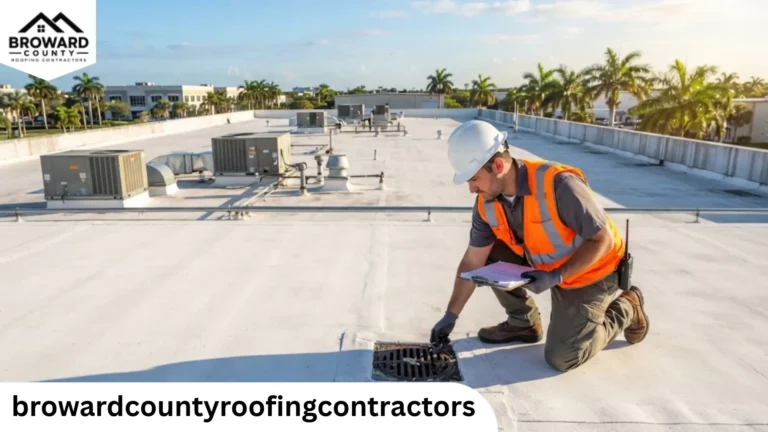
We start at the drains. Clogged drains cause more flat roof misery than just about anything, so we clear them and run water to see how fast they empty. Then we walk the whole roof. Seams, patches, flashing, edges. We inspect each vent, pipe, and unit because that’s where leaks like to begin.
We look at the surface for any bubbles, cracks, or thin areas. We examine the coating if there is one. Small problems get fixed right then, like a patch or a bit of sealant. Bigger ones go in a report with photos.
And you do get the report. Keep every one.
Why Keep the Paperwork?
Plenty of roof warranties ask for regular upkeep. If something fails and you can’t show anyone looking at it, the maker can get picky about paying.
Insurance has a similar attitude. Damage from neglect isn’t treated like damage from a storm, and a stack of dated inspection reports shows you took care of things. That’s not the main reason to service a roof, but it’s a nice perk.
The Monthly Walk-Around

Between our visits, somebody on your team can keep an eye out. No ladder. Please.
Each month, and immediately after any heavy rainfall, check the roof from a window, a staircase, or the ground level. Puddles remaining since yesterday? Debris around the edges? Any new stains appearing on the ceilings or walls inside? Record this information with the date.
If something looks different, call. A phone call is a lot cheaper than a leak.
The Cost of Skipping It
Let’s talk about money, since that’s usually what people really want to know. A servicing visit costs a small fraction of what one leak does.
Here’s how it goes wrong. Leaves clog a drain. Water sits. The water finds a weak seam and gets into the insulation. The insulation soaks up like a sponge, ceiling stains, and now you’re paying to replace a chunk of roof, ceiling tiles and maybe stock. All because of a handful of leaves.
We’re not trying to scare anyone. It’s just arithmetic. Service is cheap. Surprises aren’t.
Small Shop vs. Big Warehouse
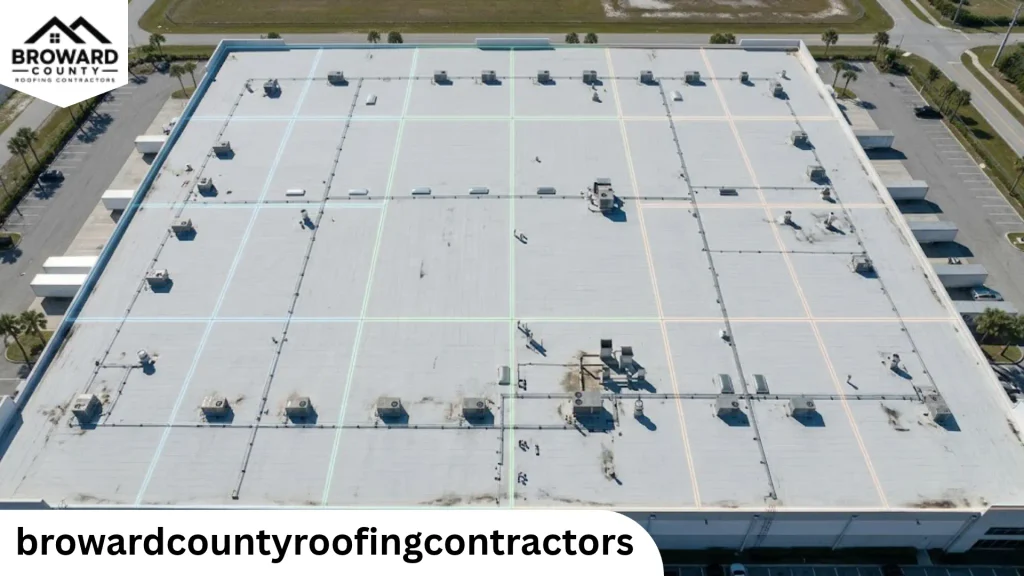
Size changes things. A little shop has one roof, a couple of drains and no margin for error. One blocked drain can leave the entire roof underwater. A big warehouse has acres of roof and more places for trouble to hide.
For the shop, two visits plus a monthly look is plenty. When it comes to the warehouse, we divided the roof into zones that were recorded in the report separately to ensure everything was covered and to identify the quickest deteriorating zone.
Different Roofs – Different Anomalies
The material matters a little. Mod bit roofs need a close look at seams and the top surface. Single-ply roofs like TPO need their seams checked, since that’s where they fail. Built-up roofs get looked at for cracks and blisters. Coated roofs get a check on how the coating is holding up.
All of them need clear drains, good flashing and tight edges. That part never changes.
After a Storm
Do not wait till the next scheduled appointment. The wind will lift shingles up and deposit debris on your roof, and the rain will make its way into your house through holes that you cannot even detect until days later.
Have an expert inspect your roof at once when it is safe. Take pictures in case of any damage and let us know. Quick action will prevent damage from escalating.
Who Owns the Roof?
Sounds silly, but this is the number one reason roofs get skipped. The owner figures the manager has it. The manager figures the owner does. The tenants assume somebody must. So nobody does.
It’s an easy fix, and it costs nothing. Pick a name. Put it on the calendar next to the dates. That person gets the reports and knows who to call. A roof with an owner gets looked after. A roof without one waits for a leak.
Signs That Can’t Wait
Some things shouldn’t wait for the next scheduled visit. Ceiling stains, damp spots, a musty smell, puddles that last more than a day or two, water dripping anywhere inside. Call right away.
Likewise, the problem of bubbles developing in the roof surface, cracks developing at the seam level, rust appearing at the edges of the roofing material, or anything that may appear loose following a wind storm. This will occur quickly, starting from something very small.
Planning for It
These are the wise owners who plan their services as part of other fixed costs, such as pest management or elevators. This is just a matter of budgeting.
The regularity of scheduling will also be an important factor in terms of planning, as when your roof reaches a certain age, you can see that it needs to be replaced a few years ahead.
What a Maintenance Plan Covers
Some roofers offer plans in which there are periodic visits and fixed fees to be paid. In case you opt for such plans, ensure that you understand everything that goes into them, and this includes the range of services offered, such as drain cleaning, minor repairs, storm damage inspection, and others, besides the speed at which they respond to your calls.
You may also want to consider the format of the report. Good reports have photos and a description of all issues plus what needs to be done.
Choosing Who to Call
It does not mean that every roofer can do commercial flat roofing. Inquire if they do your type of roof and how frequently. Also inquire about the details of their visits and if they give you a report in writing along with pictures. Find out how they deal with emergencies and if they can work on your business schedule.
Check their licensing and insurance and all guarantees in writing. The right company will learn the history of your roof. With a few visits, they can tell you about any changes that go unnoticed by you.
What We Offer
Our team offers scheduled flat roof inspections, drain cleaning, seam and flashing repair, leak repair, coating work and after-storm checks. We keep records for every visit. And when a roof is nearing the end, we help plan for replacement before it turns into an emergency.
We’ll tell you what your roof needs and what it doesn’t. If one visit a year is really enough, we’ll say that, even though it means one less call for us. Honest advice builds more business over time than padding a schedule ever could.
Things Owners Get Wrong
A few ideas come up again and again. “It’s not leaking, so it’s fine” is the big one. Leaks are the last symptom, not the first. By the time water shows inside, it’s been working on the roof for weeks.
Another is “the roof is new, so skip it this year.” New roofs still have drains that clog and flashing that shifts. And then there’s “we’ll fix it all at once when it gets bad.” That one costs the most. Small fixes done early are almost always cheaper than one big fix done late.
What Servicing Can’t Do
Quick reality check. Servicing keeps a good roof healthy. It doesn’t bring a dead roof back to life. If the insulation is soaked or the membrane is worn through, no number of visits will fix that.
The good news is that regular visits tell you when that day is coming. You’ll see it in the reports long before it hits. And that’s when we talk about replacement, on your schedule, not the storm’s.
FAQs
Is twice a year really enough for a small shop?
Normally yes, if the roof is doing well. Small buildings have smaller margins, but an examination each month on the ground level is good.
Is there any servicing necessary for a brand new roof?
Yes, within a year of installation. This helps to discover any small problems with the installation process and starts the records you may need for your warranty.
Can I lose my warranty because I did not get servicing?
Yes, in most cases. Your warranty might require regular servicing, so you should check your warranty terms.
Is it possible to have our maintenance staff perform the servicing?
They can perform a ground-level check and drain cleaning, but roof walking and seam checking should be done by specialists.
How long will the servicing procedure take?
On average, for a small or medium building – several hours, larger ones take more time depending on their condition.
Is it possible to have the work performed without stopping the operations of the building?
Yes, most of the time. The servicing process is performed on the roof and does not interfere with your activities.
Choose Two Dates
The most important thing that you can get from everything you have read is that you must choose two dates, one for spring and one for fall, and mark them in your calendar right away before the busy time takes over.
Also, if it has been a long time since your roof was last inspected, don’t wait any longer. Broward County Roofing Contractors is ready to walk it, photograph it and tell you where it stands.