After a hard Broward County storm, most homeowners do the same thing. They step outside, look up at the roof, and try to judge whether anything is wrong. From the ground, a missing shingle might be visible. A cracked sealant line, a lifted tile edge, or a soft spot near a vent usually isn’t.
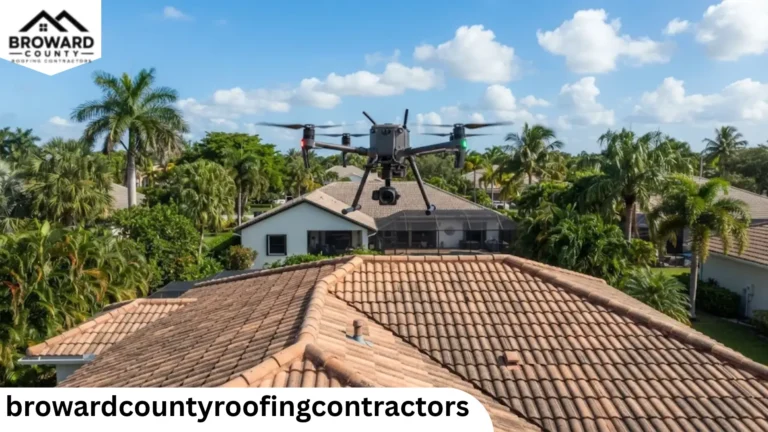
A drone roof inspection in Florida closes that gap. A trained pilot flies a camera-equipped drone over your roof and captures close-up photos and video of every section, without anyone climbing a ladder. You get a clear visual record of your roof’s condition, and the inspection is often completed faster than a traditional walk-through.
This guide explains how drone inspections work, where they help most, where they fall short, and when a hands-on inspection is still the better choice.
What Is a Drone Roof Inspection?
A drone roof inspection uses a small unmanned aircraft with a high-resolution camera to photograph and record your roof from above and at close range. The pilot flies set patterns over the roof surface, then captures detailed shots of problem areas such as flashing, penetrations, ridges, and drainage points.
Some systems also carry thermal cameras. Thermal imaging can show temperature differences on a roof surface, which may point to trapped moisture in certain roof types. It is a screening tool, not a final diagnosis, and findings usually need to be confirmed with hands-on checks.
Commercial drone flights in the United States are regulated by the FAA, and pilots flying for business purposes generally need a Remote Pilot Certificate under Part 107. When you hire a roofer for this service, it is reasonable to ask whether the pilot is certified and whether the company carries insurance.
Why Drone Inspections Make Sense for Broward County Roofs
Broward County roofs deal with intense sun, heavy seasonal rain, salt air near the coast, and the wind exposure that comes with hurricane season. Those conditions create real inspection challenges:
- Steep or tile roofs can be risky to walk, and walking on aged tile can crack it.
- Large flat commercial roofs take time to cover on foot.
- Wet or hot surfaces make roof access less safe for inspectors.
- Post-storm conditions often call for a fast first look before repairs are scheduled.
A drone lets an inspector assess these roofs without adding foot traffic or safety risk to the process.
Drone Inspection vs. Manual Roof Inspection
Neither method is better in every situation. Here is how they compare in practice.
| Factor | Drone Inspection | Manual Walk-Through |
| Safety | No roof access needed for the initial survey | Inspector must climb and walk the roof |
| Speed | Typically quicker for the survey phase | Slower on large or complex roofs |
| Roof wear | No foot traffic on tiles or shingles | Foot traffic can stress fragile materials |
| Documentation | Time-stamped photos and video | Photos taken selectively by the inspector |
| Detail | Strong visual detail; cannot test or touch | Can probe, press, and physically test areas |
| Hidden issues | May miss soft decking or interior moisture on its own | Better at confirming structural concerns |
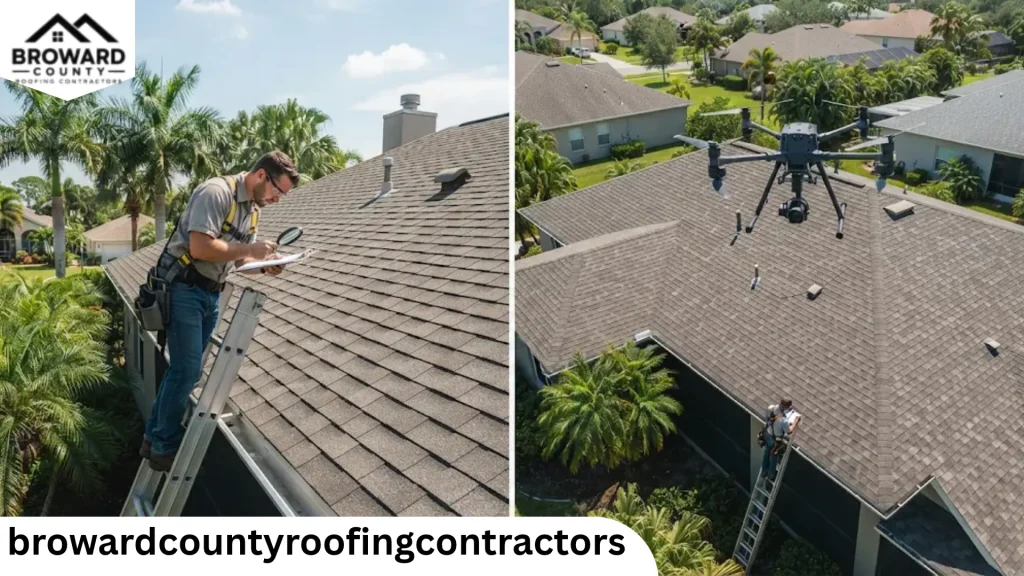
The takeaway is that drones are excellent for finding and documenting visible problems. A hands-on inspection is better for confirming what is causing them. Many contractors use both together: the drone surveys the roof, and a technician checks any flagged areas up close.
What a Drone Can Help Spot
With clear photos and video, a drone inspection can help identify:
- Missing, cracked, or lifted shingles and tiles
- Damaged or separated flashing around chimneys, vents, and skylights
- Sealant failure at penetrations
- Ponding water on flat or low-slope roofs
- Clogged or damaged drainage such as scuppers and gutters
- Storm debris and impact marks
- Granule loss and surface wear on asphalt shingles
- Membrane seams lifting or blistering on flat roofing systems
Because the footage can be paused and zoomed, small details that are easy to overlook in person become much easier to study.
What a Drone Cannot Do
A responsible inspection company will tell you this up front. A drone cannot:
- Feel for soft or spongy decking
- Confirm moisture inside the roof system without additional testing
- Replace an attic inspection for leaks, staining, or ventilation issues
- Verify fastener condition, underlayment condition, or roof deck attachment on its own
If an inspector claims a drone alone can diagnose every roofing problem, treat that as a red flag.
How Drone Inspections Help with Insurance Documentation
Insurance questions are one of the most common reasons Broward homeowners schedule a roof inspection. Photo and video records can be useful in several situations:
- After a storm, to document visible conditions before and after repairs
- During claim discussions, to give you organized visual evidence of the roof’s condition
- At renewal time, when an insurer may ask about your roof’s age or condition
- When preparing for other inspections, such as a 4-point inspection, a wind mitigation inspection, or a roof certification
A few honest cautions apply. Drone footage documents what is visible. It does not guarantee a claim will be approved, a premium will drop, or an insurer will accept it in place of its own requirements. Insurers set their own documentation standards, so check with your carrier about what it will accept before you rely on any report.
What to Expect During a Drone Roof Inspection
Here is a typical process:
- Scheduling and weather check. Drones can’t fly safely in high winds or heavy rain, so flights may be rescheduled around Florida’s afternoon storms.
- Pre-flight review. The pilot checks the property for obstacles, power lines, and airspace considerations.
- Roof survey. The drone flies a systematic pattern to capture the full roof surface.
- Close-up detail shots. The pilot zooms in on flashing, vents, ridges, edges, and any areas of concern.
- Review and findings. The inspector goes through the images and flags problem areas.
- Follow-up recommendations. If something looks serious, a hands-on check or repair estimate is the logical next step.
Most homeowners are not required to be on the roof, and many don’t need to be home for the exterior flight, though it helps to be available for questions afterward.
Practical Tips Before You Book
- Ask for sample photos from a past inspection so you know what the report looks like.
- Confirm the pilot’s credentials, including FAA Part 107 certification.
- Ask whether findings are verified in person when damage is suspected.
- Ask what you receive afterward, such as a photo set, a written summary, or both.
- Schedule soon after a storm if you suspect damage, since small problems can grow quickly in Florida’s rainy season.
- Keep the images in an organized folder with the inspection date for your own records.
When a Hands-On Inspection Is the Better Choice
Choose an in-person inspection, or pair it with a drone survey, if:
- You see ceiling stains, damp insulation, or musty odors inside the home
- The roof is many years old and approaching the end of its expected life
- You are buying or selling a property and need a detailed condition assessment
- A drone survey flagged an area that needs probing or testing
- Your insurer specifically requires an in-person inspection
Final Thoughts
Drone inspections give Broward County homeowners and property owners a safer, faster, and well-documented way to understand what is happening on their roofs. They are especially valuable for roofs that are hard to walk, large in scale, or in need of a quick post-storm look. They work best as part of a complete inspection process, not a replacement for it.
If you are unsure about your roof’s condition, start with a professional assessment. Call (754) 203-8806 or visit us at 4491 S State Rd 7, FL 33314 to schedule a roof inspection and get clear answers before small issues turn into costly repairs.
FAQs
How much does a drone roof inspection cost in Florida?
Pricing varies with roof size, complexity, and the level of reporting included. Ask your contractor for a written quote that lists exactly what is covered, such as the flight, the photo set, and any written findings.
Is a drone roof inspection accurate?
It is very reliable for visible conditions like missing materials, flashing damage, and ponding water. It cannot confirm hidden conditions such as soft decking or interior moisture, which usually require a hands-on check.
Do I need a drone inspection for an insurance claim?
Not necessarily. Requirements differ by insurer and by situation. Photo and video documentation can support your records, but you should confirm with your carrier what it accepts.
Are drone roof inspections legal in Florida?
Commercial drone operations in the U.S. fall under FAA rules, and business pilots generally need a Part 107 Remote Pilot Certificate. Ask your contractor to confirm their pilot is properly certified.
Can a drone find roof leaks?
A drone can reveal likely causes of leaks, such as damaged flashing, cracked tiles, or ponding water. Pinpointing the exact leak source often requires an attic or hands-on inspection as well.
How long does a drone roof inspection take?
The flight itself is often much shorter than a full manual walk-through, though total time depends on roof size and layout. Weather can also affect scheduling.
Can drones inspect tile roofs without damaging them?
Yes. Because no one walks the roof, a drone avoids the foot traffic that can crack aging tiles.
How often should I inspect my roof in Broward County?
Many roofers suggest at least an annual check and an additional inspection after major storms, though the right schedule depends on your roof type and age.