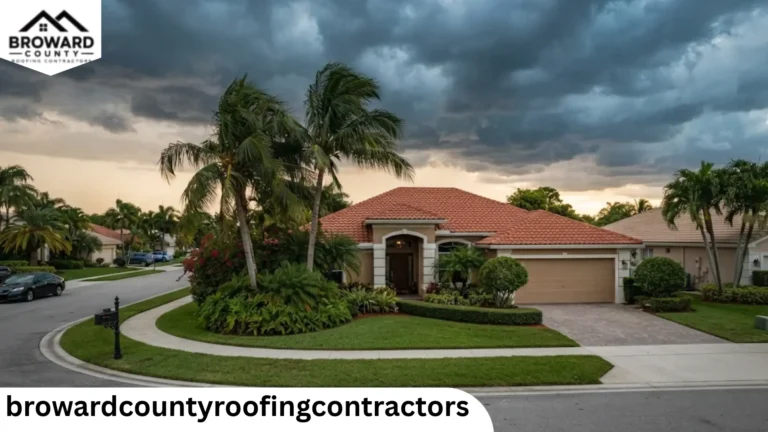
If you own a home or building in Broward County, your roof is held to a tougher standard than roofs in most of Florida, and nearly everywhere else in the country. That’s because Broward sits inside the High Velocity Hurricane Zone (HVHZ), a designation in the Florida Building Code that applies only to Broward and Miami-Dade counties.
Many homeowners find this out mid-project, when a quote arrives with unfamiliar product approvals, extra inspections, or a longer timeline than expected. This guide explains what the HVHZ is, how it changes roof repairs and replacements, and what to ask before hiring an HVHZ roofing contractor in Broward County.
What Is the High Velocity Hurricane Zone?
The Florida Building Code applies statewide, but it contains a separate set of requirements for the HVHZ. The service covers both Broward County and Miami-Dade County. The reasoning is geographic: South Florida has a long history of direct hurricane strikes, and a roof that fails in high wind can lead to water intrusion, interior damage, and flying debris that endangers neighboring properties.
In practice, the HVHZ rules affect three things:
- The materials you’re allowed to use
- How those materials are installed and fastened
- How the work is permitted and inspected
The code is updated periodically, so details can change between code cycles. Your roofing contractor and the local building department are the authoritative sources for what applies to your specific property.
How HVHZ Requirements Differ From the Rest of Florida
A roof in Orlando and a roof in Fort Lauderdale may look similar from the street. Under the code, they are often treated very differently.
Product Approval Is Not Optional
Roofing products used in the HVHZ generally must be approved for use there. Approval typically comes through a Miami-Dade Notice of Acceptance (NOA) or a Florida Product Approval, and it covers a specific product installed in a specific way. An approved shingle, tile, or membrane isn’t automatically approved for every installation method.
Approved systems are tested against recognized protocols, including the Testing Application Standards (TAS) used in the HVHZ. That testing looks at how a complete roof assembly performs under wind uplift and wind-driven rain, not just how a single material holds up on its own.
For homeowners, this means two things:
- A material you saw used on a roof elsewhere in Florida may not be allowed here.
- A contractor should be able to show you the approval documents for the system they’re proposing.
Attachment and Fastening Get Close Attention
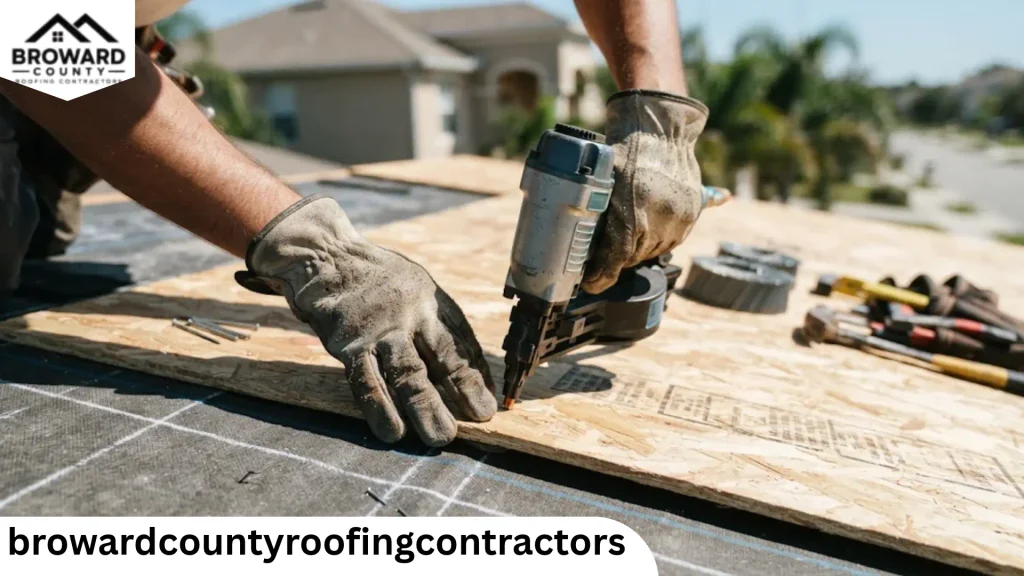
Wind damages roofs by pulling them upward, not just by blowing debris at them. That is why HVHZ requirements focus on how the roof deck is secured to the structure and how the roof covering is secured to the deck. Fastener type, spacing, and installation method matter, and the approved installation instructions for each product have to be followed closely.
This is also where shortcuts cause trouble. A roof can look fine on installation day and still be under-fastened, a problem that often only shows up during a storm.
Permits and Inspections Are Part of the Job
Roofing work in Broward generally requires a permit pulled through the local building department, and inspections are part of the process. The specific stages and requirements can vary by municipality, so ask your contractor which inspections apply to your project and when they’ll be scheduled.
Avoid contractors who recommend bypassing the permit process just to cut costs or speed up the project. Unpermitted work can create problems with insurance claims, property sales, and code compliance.
How the HVHZ Affects Common Roof Types in Broward County
Tile Roofs
Tile is common across Broward, and HVHZ-approved tile systems come with specific attachment methods, such as mortar, foam adhesive, or mechanical fasteners, depending on the approval. The method has to match the approved assembly. Older tile roofs installed under earlier codes may not match current standards, which is worth knowing before you plan a repair or replacement.
Asphalt Shingle Roofs
Shingles are popular for their cost and availability, but not every shingle product carries the approvals needed for the HVHZ. If you’re comparing options, confirm the specific shingle and installation method are approved for use here. Our page on asphalt shingle roofing covers what to look for.
Metal Roofs
Metal systems can perform well in high-wind conditions when they’re an approved assembly, installed with the right underlayment, fasteners, and panel attachment. As with every roof type, the approval applies to the full system.
Flat and Low-Slope Roofs
Many commercial buildings and some residential properties in Broward have flat or low-slope roofs. These systems use membranes and adhered or mechanically attached assemblies, and the HVHZ approval requirements apply to them too. Edge details and perimeter flashing deserve extra attention, since wind tends to start lifting a roof along its edges. Our article on why flat roofs fail faster near the coast goes into more detail.
What This Means for Repairs vs. Replacement
Not every roof job triggers a full replacement. A small repair, such as replacing a few damaged shingles or sealing a flashing detail, is different from a full re-roof. But the scope of the work, the age of the roof, and the extent of the damage all affect which requirements apply, and the rules are not always intuitive.
Before approving any work, ask your contractor to explain:
- Whether the job is classified as a repair or a re-roof
- Whether a permit is required and who will pull it
- Which approved product and installation method will be used
After a storm, having a roofing expert inspect your roof can help identify damage and determine what repairs may be needed.It gives you a clear picture of the condition before you commit to a repair or replacement.
How to Choose an HVHZ Roofing Contractor in Broward County
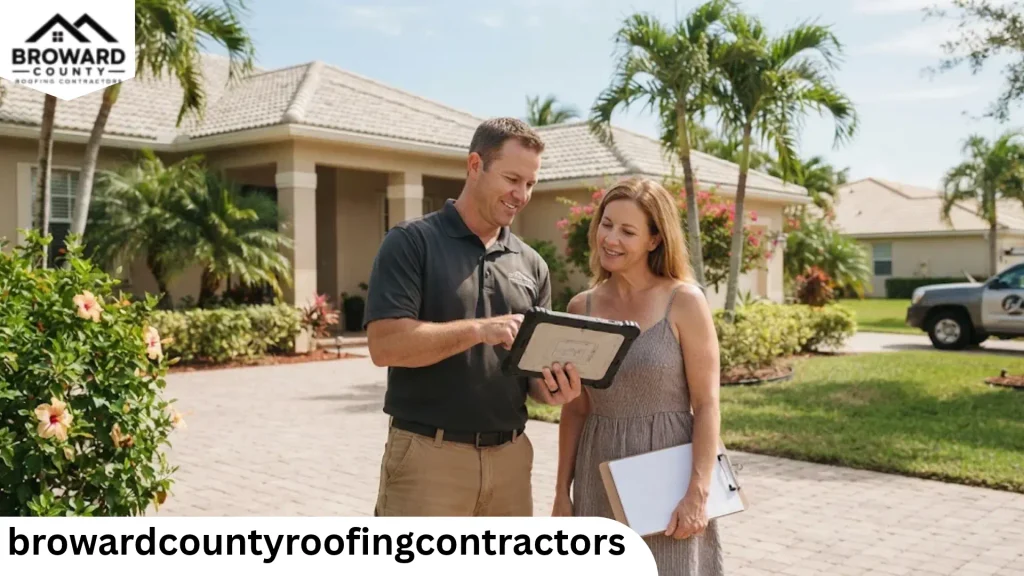
Experience with the HVHZ is a real differentiator. A contractor who mostly works outside South Florida may not be familiar with Broward’s product approval and inspection process. Here’s what to look for:
- Proper licensing. Confirm the contractor holds the required Florida license for roofing work, and ask whether any additional local registration applies. You can verify state licenses through the Florida Department of Business and Professional Regulation (DBPR).
- Insurance. Ask for current proof of liability and workers’ compensation coverage.
- Product approval documentation. A qualified contractor should readily show you the approvals for the products they propose.
- Permit handling. The contractor should explain how permitting and inspections will be handled, and who is responsible for each.
- A written scope of work. It should name the materials, the installation approach, and what’s included in the price.
- Local references. Ask about recent Broward projects similar to yours.
If a quote is much lower than others, ask what’s different. Differences often come down to materials, fastening, or skipped steps.
Common HVHZ Roofing Mistakes to Avoid
- Assuming a material is approved because it’s widely sold. Availability doesn’t equal HVHZ approval.
- Treating the permit as optional. It protects you at resale and during insurance claims.
- Choosing on price alone. The cheapest bid may leave out the details that make a roof perform in high wind.
- Waiting until after a storm. Contractors get busy fast after major weather events, and rushed decisions are rarely good ones.
- Ignoring roof-to-wall connections. The roof covering is only part of the system, so it’s worth understanding hurricane straps and roof-to-wall connections too.
HVHZ Roofing and Your Insurance
Roof condition and construction details can affect your homeowners insurance in Florida. A wind mitigation inspection documents features such as roof shape, roof-to-wall attachment, and opening protection, and some insurers offer premium credits based on those findings. What you qualify for depends on your property and your insurer, so ask your carrier directly. Some insurers also ask for a 4-point inspection or a roof certification letter on older homes.
The HVHZ exists because Broward County’s location makes strong roofs a necessity, not a luxury. For homeowners, the key points are straightforward: use approved products, make sure they’re installed the way the approval requires, pull the right permits, and hire a contractor who knows how the local process works.
Final Thoughts
If you’re planning a repair, replacement, or just want to understand your roof’s condition, our team can walk you through your options. Call us at (754) 203-8806 or request a roofing estimate.
FAQs
What counties are in Florida’s High Velocity Hurricane Zone?
The HVHZ in the Florida Building Code covers Broward County and Miami-Dade County.
Do I need an HVHZ-approved roofing contractor in Broward County?
You need a properly licensed contractor who is familiar with HVHZ requirements, including product approvals, installation methods, and local permitting. Ask for proof of licensing and approval documentation before signing a contract.
Does a roof repair need a permit in Broward County?
It depends on the scope of the work and the local jurisdiction. Some minor repairs may be treated differently from a re-roof. Confirm with your contractor and your city’s building department before work begins.
Can I use any roofing material on my Broward County home?
No. Roofing products used in the HVHZ generally need to be approved for that use, typically through a Miami-Dade NOA or Florida Product Approval, and installed according to the approved instructions.
Will an HVHZ-compliant roof lower my homeowners insurance?
Not automatically. Insurers evaluate roof features and may offer credits based on documented wind-resistant features, often through a wind mitigation inspection. Check with your insurance provider for the specifics.
How do I know if my existing roof meets current HVHZ standards?
A professional inspection can compare your roof’s materials and installation with current requirements. Older roofs were often built under earlier codes, so they may differ from today’s standards even if they are in good condition.
How long does an HVHZ roof replacement take?
Timelines vary with roof size, weather, material availability, and permit and inspection scheduling. Ask your contractor for a realistic schedule in writing.