When a hurricane approaches Broward County, most homeowners think about shutters, impact windows, and the shingles on top. Few think about a small piece of galvanized steel hidden in the attic, yet it can decide whether the roof stays on the house.
Hurricane straps (also called hurricane clips or ties) connect your roof framing to your walls. This guide explains how hurricane straps work, what the different connection types are, how to tell what your home has, and what to know before planning hurricane straps roof installation in Florida.
What Are Hurricane Straps?
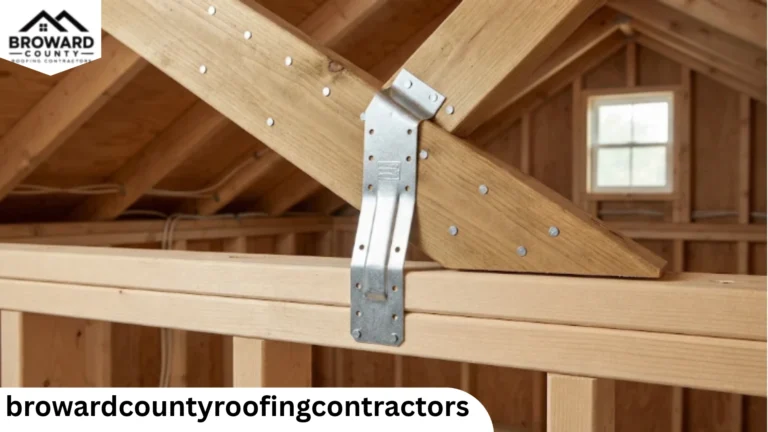
Hurricane straps are metal connectors, usually galvanized steel, that fasten the roof structure (rafters or trusses) to the top of the wall. Think of them as a mechanical seatbelt for your roof.
Without them, a roof is held to the walls mainly by its own weight and a few nails driven at an angle through the bottom of each rafter or truss. That is called toe-nailing. Toe-nails can resist sideways movement reasonably well, but they are much weaker against uplift.
Why Uplift Is the Real Problem
Wind can do more than simply press against a home’s exterior. As it moves over a roof, it creates suction that tries to lift the roof upward, much like air flowing over an airplane wing. Wind also pushes upward on the underside of the roof overhangs and, if a window or door fails, pressurizes the inside of the home, adding to the lift.
If the roof lifts off the walls, the structure loses its lid. Rain gets in, and walls that were braced by the roof can lose support. Strong roof-to-wall connections work as one link in a continuous load path: the roof, the walls, and the foundation tied together so wind forces travel down into the ground instead of tearing the house apart.
Types of Roof-to-Wall Connections
Florida wind mitigation reports typically classify the connection between roof framing and walls in these categories, from weakest to strongest:
- Toe-nails: Nails driven at an angle through the rafter or truss into the wall plate. No metal connector.
- Clips: Small metal connectors that fasten to the truss or rafter on one side and the wall plate on the other. They are generally attached on one side or at the inside face of the framing.
- Single wraps: A metal strap that wraps over the top of the truss or rafter and fastens down both sides of the wall.
- Double wraps: Two straps, or a strap that wraps the framing in a way that provides connection on both sides, giving the highest-rated type of attachment.
The right connector for a given home depends on the framing, the wall construction, and the manufacturer’s installation requirements, so this is something to confirm with a licensed professional rather than guess.
Why This Matters in Broward County
Broward County sits in a region with a long history of hurricane exposure, and local building requirements reflect that. Homes built or substantially renovated under more recent codes generally have stronger roof-to-wall connections than older homes, while many older houses, particularly those built before modern wind-resistance requirements, may rely on toe-nails alone.
However, an older home is not automatically at risk. It does mean the connection type is worth checking, especially if you are planning a re-roof, buying a home, or reviewing your insurance.
How to Find Out What Your Home Has
You have a few practical options:
- Check your wind mitigation report. If you have had one done, it lists the roof-to-wall attachment type.
- Look at your original permit or building plans. The local building department may have records for your address.
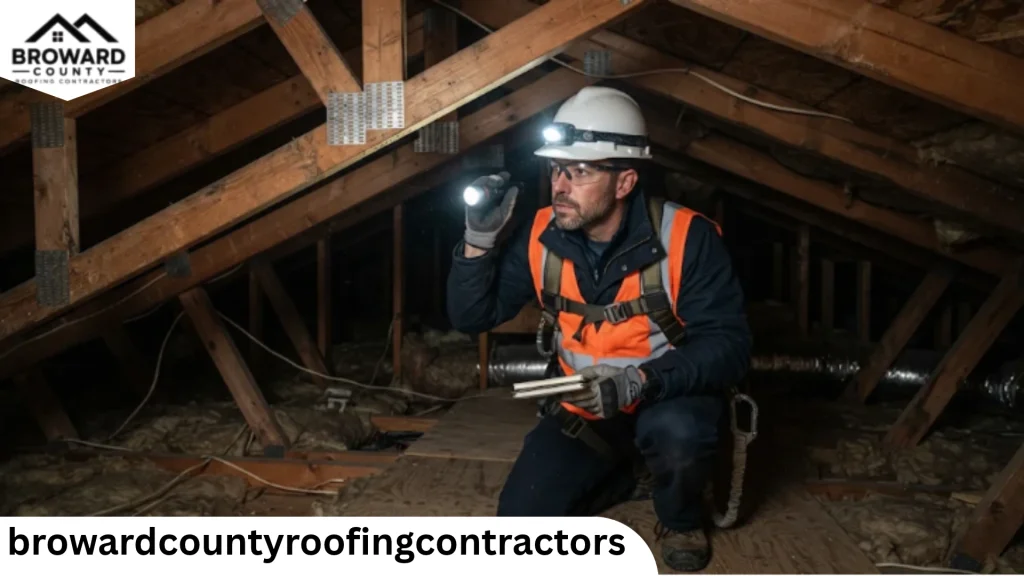
- Have a professional inspect the attic. A roofer or licensed inspector can look at the connections and tell you what is there. This is the most reliable approach. Attic inspections should be done by someone experienced, since attic conditions can be hot, tight, and hazardous.
If you are a homeowner who wants to look yourself, treat it as a visual check only. Never walk on ceiling drywall or unsupported areas, and skip it if you are unsure.
Hurricane Straps Roof Installation in Florida: What to Expect
Adding or upgrading straps on an existing home is called retrofitting. A few things are worth knowing before you start.
The method depends on access. Some retrofits are done from the attic, attaching connectors where the roof framing meets the wall plate. In other cases, the work can be coordinated with a roof replacement, when the roof deck is open and the framing is accessible. Your contractor should explain which approach fits your home.
Installation details matter. Connectors only perform as designed when they are the right type, are installed on the right framing, and use the fasteners specified by the manufacturer. Wrong nails, missing nails, or connectors placed on the wrong side can reduce effectiveness.
Permits and inspections apply. Structural roof work generally requires a permit in Florida, and your contractor should handle permitting and any required inspections. Ask who is responsible for it before work begins.
Get it documented. After the work, ask for paperwork showing what was installed. If your goal is to update a wind mitigation report afterward, a licensed inspector will need to verify the upgraded connections.
Hurricane Straps and Your Insurance
In Florida, roof-to-wall attachment is one of the features reviewed on a wind mitigation inspection. Stronger connections may qualify a home for a wind mitigation credit on its homeowners insurance, but the amount depends on your insurer, your policy, and the other features of your home. Do not assume a specific discount. Ask your insurance agent how your carrier treats these features and what documentation it requires. (Added sentence:) On older homes, insurers may also ask for a 4-point inspection or a roof certification letter, so confirm which documents your carrier needs.
Questions to Ask a Roofing Contractor About Straps
Before hiring anyone for hurricane straps roof installation or a re-roof, ask:
- Are you licensed in Florida, and can I verify it?
- What type of roof-to-wall connection does my home currently have?
- Will the work be permitted and inspected?
- Which connectors and fasteners will you use, and do they follow the manufacturer’s specifications?
- Will you document the work in writing?
- Is this a standalone retrofit, or will it be part of a roof replacement?
Clear, specific answers are a good sign. Vague ones are worth questioning.
The Bottom Line
Hurricane straps are not glamorous, and once the roof is on, nobody sees them. But they are one of the most important parts of a storm-ready home because they keep the roof attached to the walls when uplift forces are at their strongest.
If you are not sure what connects your roof to your walls, have it checked before the next storm season, not during it. Our team at Broward County Roofing Contractors can help you understand your home’s current setup and your options. Call us at (754) 203-8806 to schedule an inspection.
FAQs
What are hurricane straps on a roof?
They are metal connectors that tie the roof framing to the walls, helping prevent the roof from lifting off during high winds.
Are hurricane straps required in Florida?
Florida’s building code includes wind-resistance requirements, and newer construction generally includes engineered roof-to-wall connections. Requirements depend on when the home was built and the local jurisdiction, so check with your local building department or a licensed professional about your specific property.
How do I know if my house has hurricane straps?
Check your wind mitigation report, your permit records, or have a professional inspect the attic where the roof framing meets the wall.
Can hurricane straps be added to an existing roof?
Yes, in many cases. This is called a retrofit. Feasibility and method depend on your home’s framing and access.
Do hurricane straps lower homeowners insurance in Florida?
They may help a home qualify for a wind mitigation credit, but discounts vary by insurer and policy. Confirm with your agent.
What is the difference between a clip, a single wrap, and a double wrap?
They are different connector styles with different levels of attachment to the framing. Double wraps are generally rated strongest on wind mitigation forms.
Does a new roof include hurricane straps?
Not automatically. A re-roof does not always change the roof-to-wall connection. Ask your contractor what is included.